
In November 2021, a group of students began a campaign to rename the Seeley Library at the Faculty of History.
The library’s namesake, John Robert Seeley (1834–95), was an historian, Cambridge Regius Professor and “the most prominent imperial thinker in late nineteenth-century Britain” (Bell 2016). Seeley’s book The Expansion of England (1883) was so consequential that it was described as “the bible of British Imperialists” (Gooch 1959) and “the single influence which did most to develop the imperialist idea” (Ensor 1963).
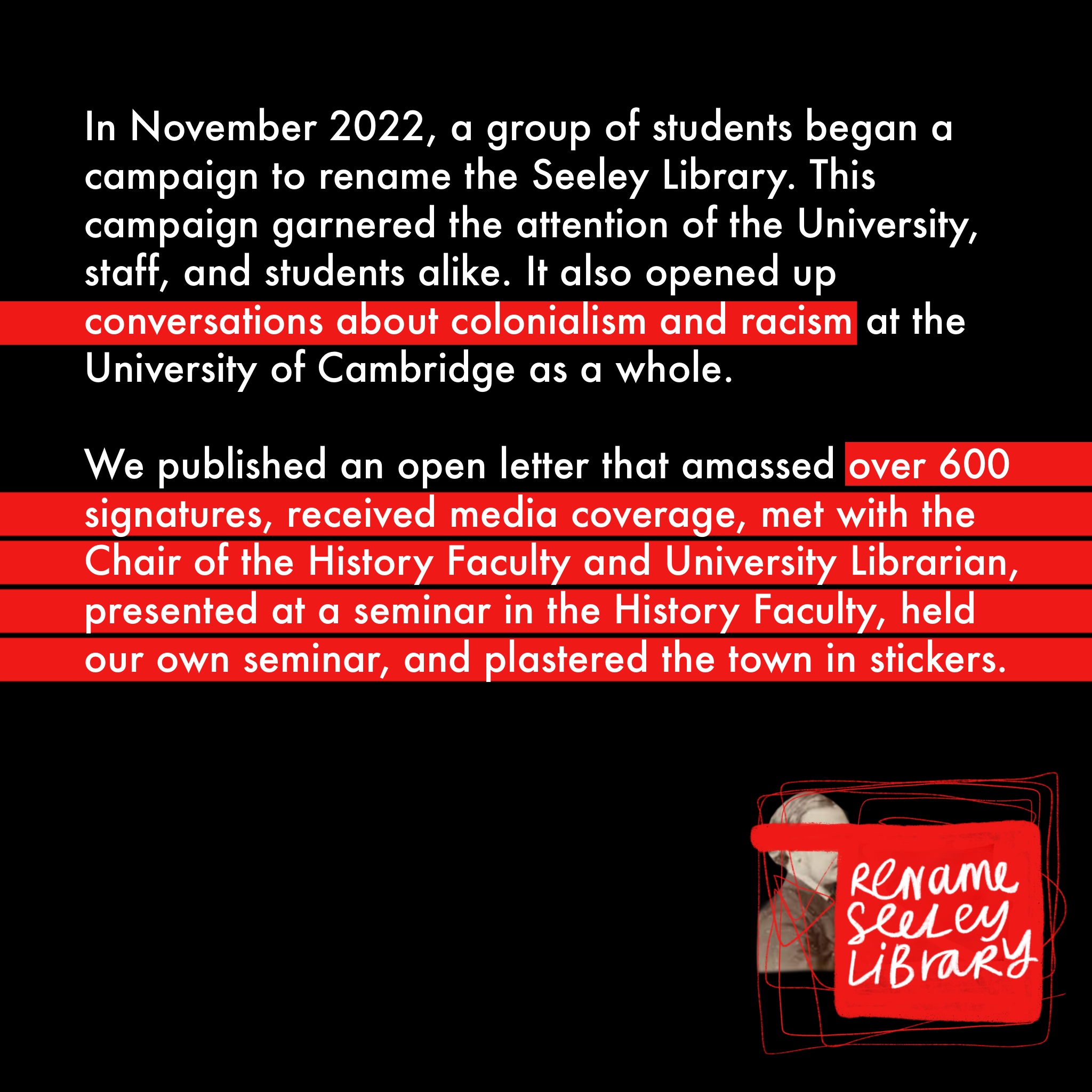
The Rename Seeley Library campaign aimed to raise awareness and facilitate conversations about Seeley’s legacy as well as about colonialism and racism at the University of Cambridge as a whole. In February 2022, the campaign presented an open letter that amassed over 600 signatures, to the Chair of the History Faculty and Director of the Libraries.
“If Cambridge is committed to looking into its legacies of empire and colonialism, then it cannot continue to blindly celebrate such a figure. Current and future students should not have to set foot in a library that commemorates British imperial conquest.”
Rename Seeley Open Letter (Feb 2022)
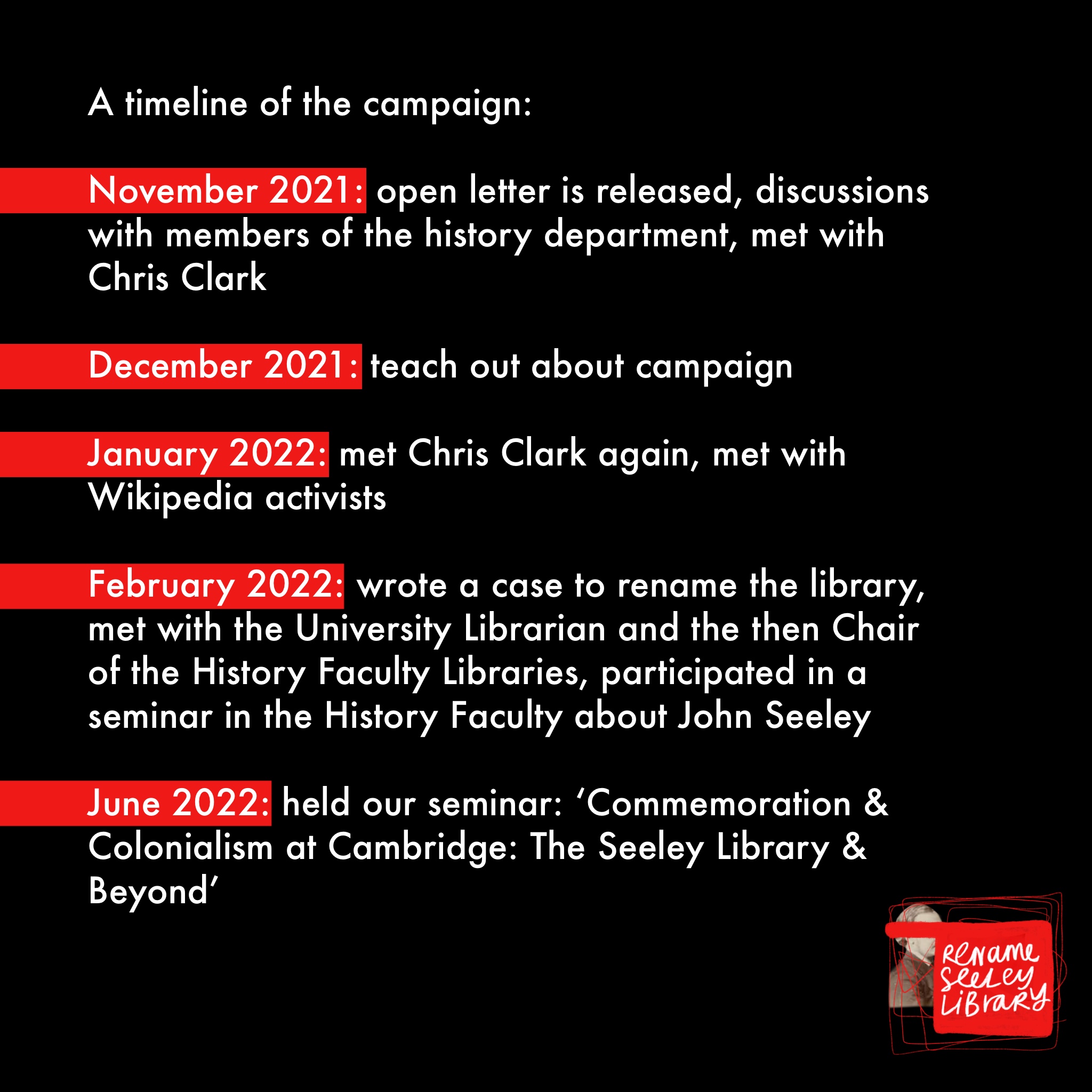
- Nov 2021 – open letter is circulated, discussions begin with members of the history department
- Dec 2021 – First teach out about the campaign and Seeley’s legacy
- 15 Feb 2022 – Second teach out: “Using wikiversity for organising and archiving movements”
- Feb 2022 – wrote a case to rename the library, met with the University Librarian and the Chair of the History Faculty Libraries
- 26 Feb 2022 – participated in a seminar in the History Faculty about John Seeley
- 17 June 2022 – held our own seminar: “Commemoration & Colonialism at Cambridge: The Seeley Library & Beyond” at St Catherine’s College
The following update was shared by organisers from the Rename Seeley Library campaign on their Instagram and Facebook on 8 Feb 2023.
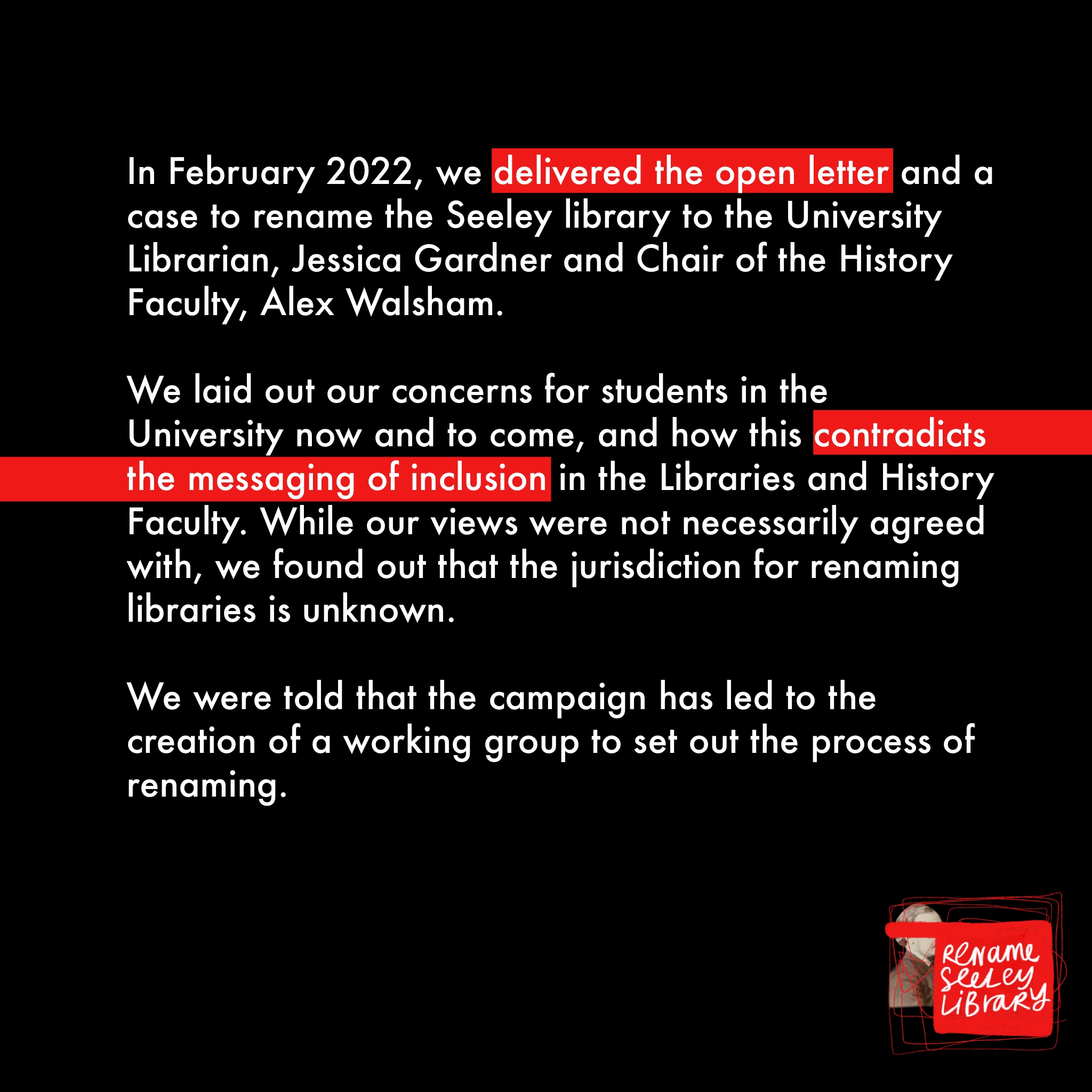
This time last year, we delivered the open letter and a case to rename the Seeley library to the University Librarian, Jessica Gardner and Chair of the History Faculty, Alex Walsham. We laid out our concerns for students in the University now and to come, and how this contradicts the messaging of inclusion in the Libraries and History Faculty. While our views were not necessarily agreed with, we found out that the jurisdiction for renaming libraries is unknown. We were told that the campaign has led to the creation of a working group to set out the process of renaming.
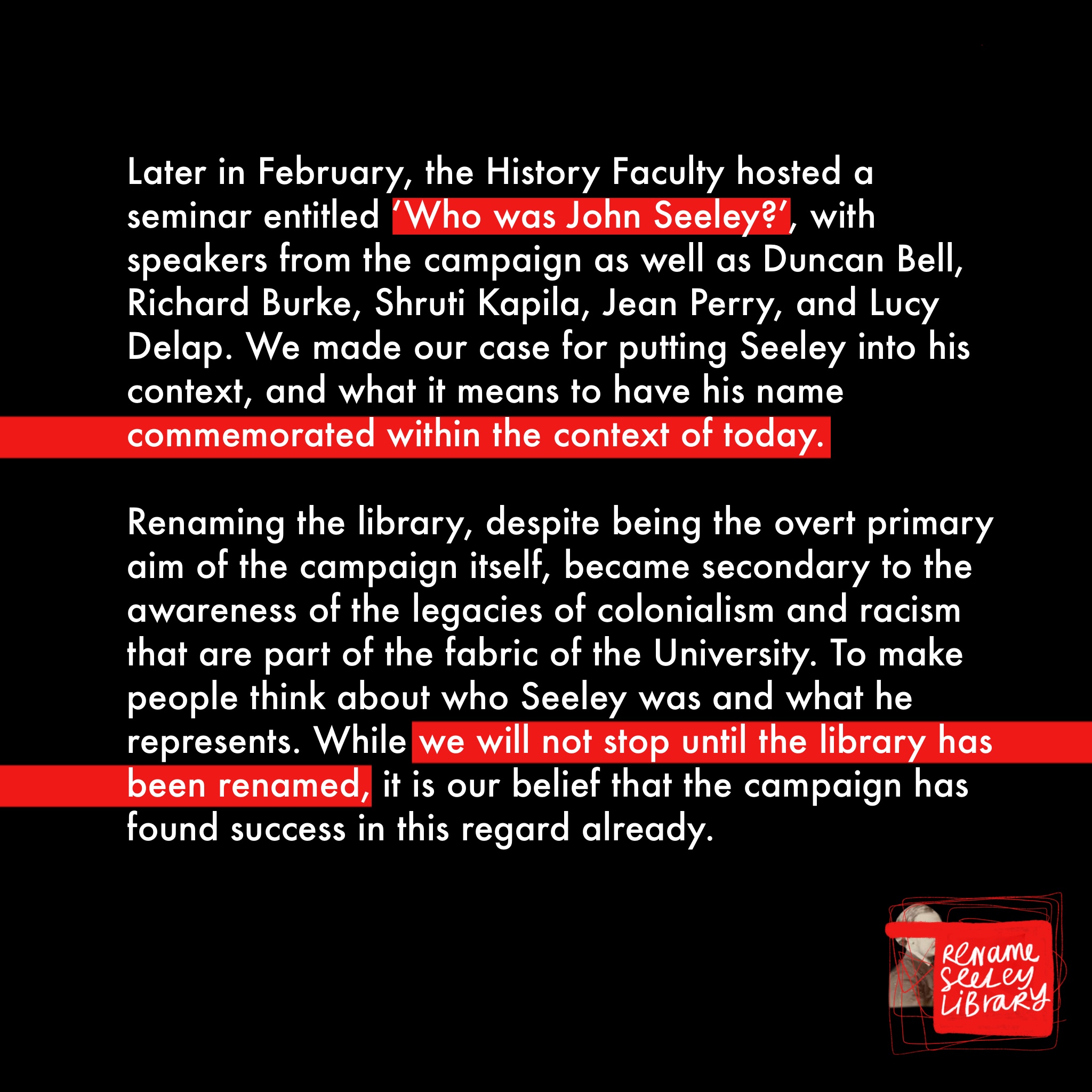
Later in February 2022, the History Faculty hosted a seminar entitled ‘Who was John Seeley?’, with speakers from our campaign as well as Duncan Bell, Richard Burke, Shruti Kapila, Jean Perry, and Lucy Delap. We made our case for putting Seeley into his context, and what it means to have his name commemorated within the context of today.
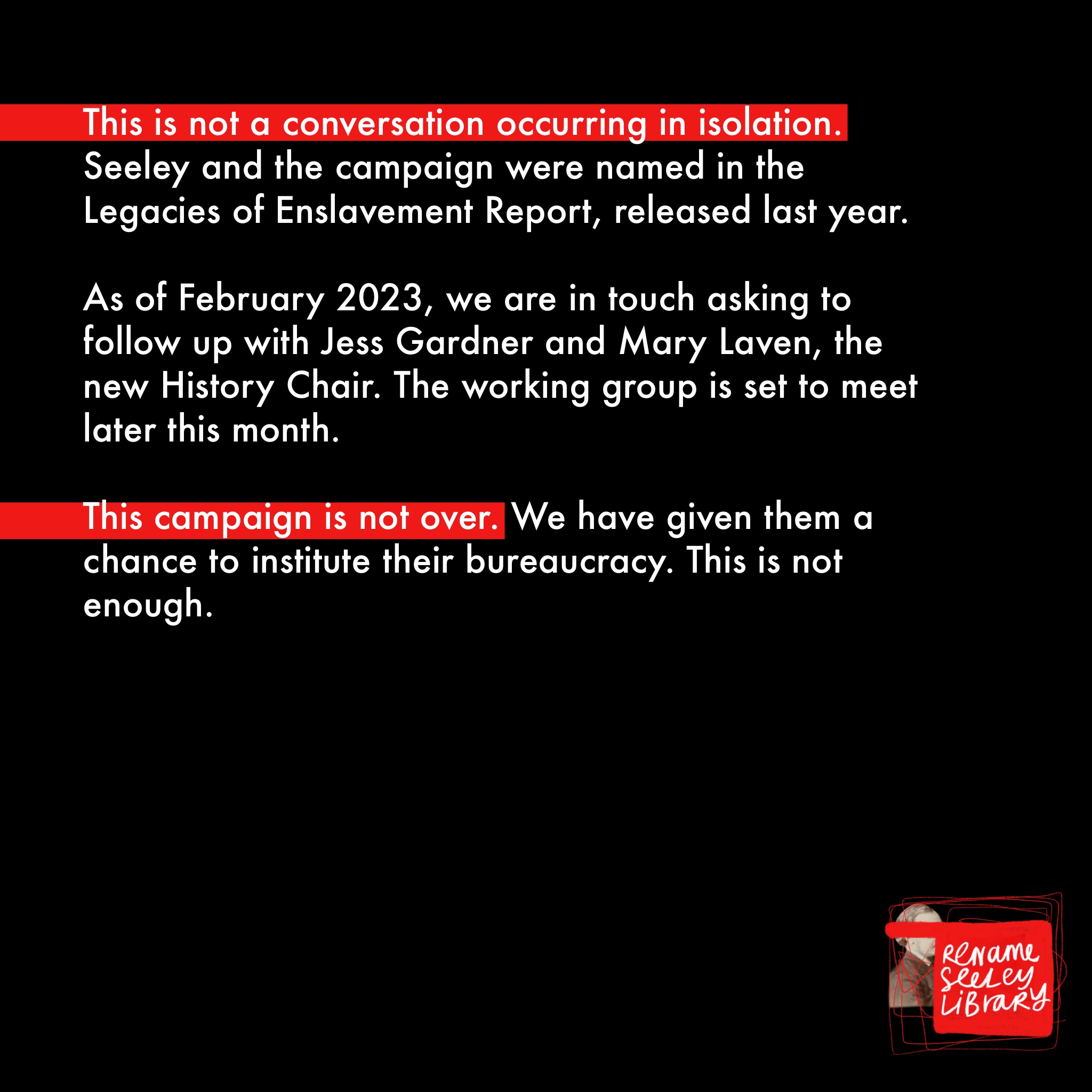
Renaming the library, despite being the overt primary aim of the campaign itself, became secondary to the awareness of the legacies of colonialism and racism that are part of the fabric of the University. To make people think about who Seeley was and what he represents. While we will not stop until the library has been renamed, it is our belief that the campaign has found success in this regard already. This is not a conversation occurring in isolation. Seeley and the campaign were named in the Legacies of Enslavement Report, released last year.
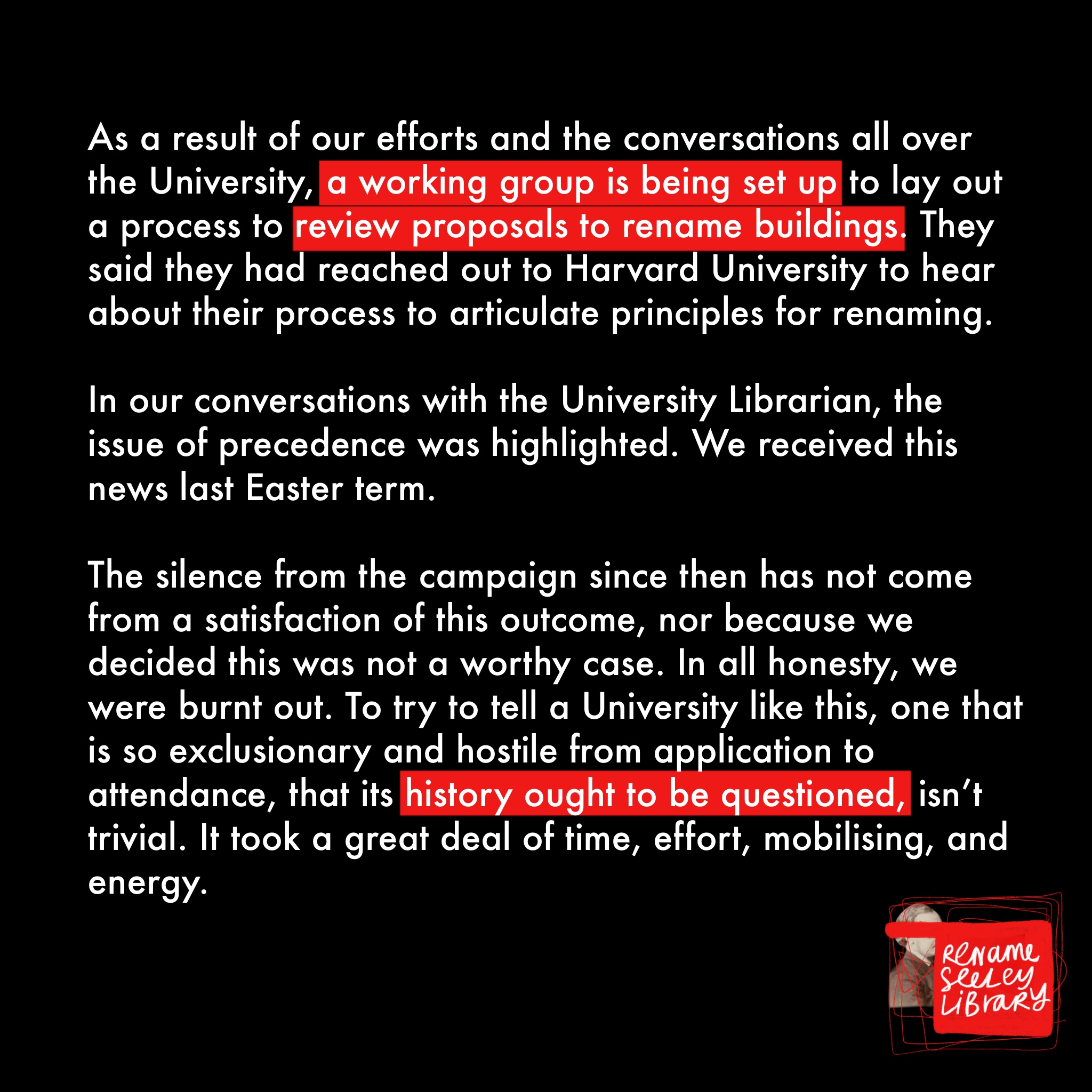
As of February 2023, we are in touch asking to follow up with Jess Gardner and Mary Laven, the new History Chair. The working group is set to meet later this month to lay out a process to review proposals to rename buildings. They said they had reached out to Harvard University to hear about their process to articulate principles for renaming. In our conversations with the University Librarian, the issue of precedence was highlighted.
The silence from the campaign since then has not come from a satisfaction of this outcome, nor because we decided this was not a worthy case. In all honesty, we were burnt out. To try to tell a University like this, one that is so exclusionary and hostile from the application to attendance, that its history ought to be questioned, isn’t trivial. It took a great deal of time, effort, mobilising, and energy.
However this campaign is not over. We have given them a chance to institute their bureaucracy. This is not enough.
This conversation must be ongoing. It should not be, but it is our responsibility to hold these bodies to account. The legacies of enslavement, colonialism, and imperialism within this University are overwhelming.
More on Decolonisation and Libraries
Decolonising through Critical Librarianship
A platform for Cambridge librarians approaching decolonisation, sharing resources and case studies.
Cambridge University Libraries Decolonisation Working Group
This working group aims to support decolonisation work within Cambridge libraries and help encourage and embed best practice.
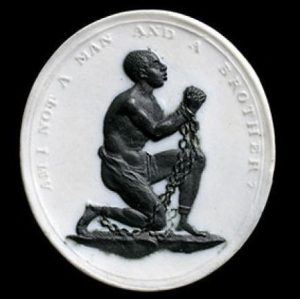
Legacies of Enslavement Inquiry
The Legacies of Enslavement Inquiry is researching into the University’s involvement in and links to the Atlantic slave trade.
 Cambridge Radical Archives